Traffic signs in Tunisia
No, this is not a boring list of traffic signs of Tunisia, as the government (
or the driving school instructor) understands them.
This is, rather, a
practical guide to tunisia traffic signs. And we are sure that each tourist, who intends to drive on Tunisian roads, will be thankful for the valueable information given here!
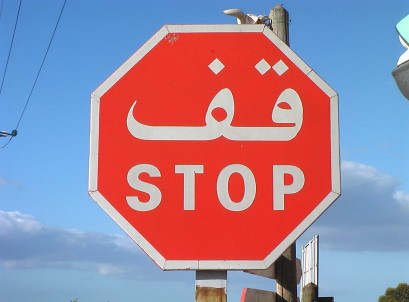
Stop
Stop signs are considered by many drivers being recommendations only. The arabic letters resemble a snail with a house on its back looking backwards - something to remember in case you see the writing in other locations and circumstances...
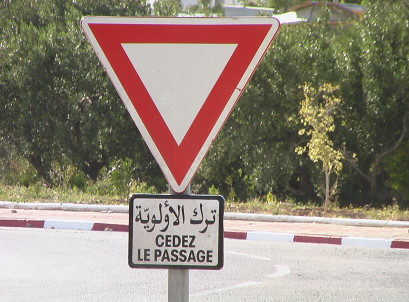
Give Way
Sometimes it is given, sometimes not - it depends in principle on the speed of the approaching vehicles.
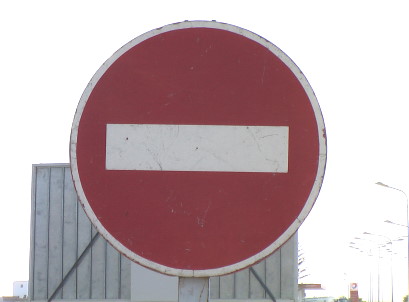
Forbidden to enter
Not to be confused with a "one way street". It means that you are not allowed to enter the street here, but it does not say what you can or cannot do when you are in the street already. You have in this street, therefore, expect cars, lorries and motorbikes going in both directions.
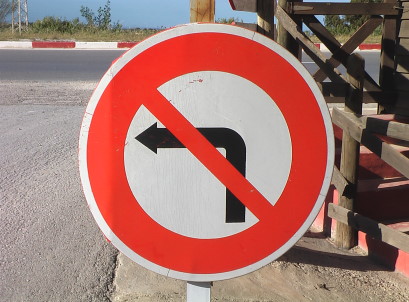
No turning (here: left)
This sign is apparently misunderstood by many drivers, because they will turn left anyway.
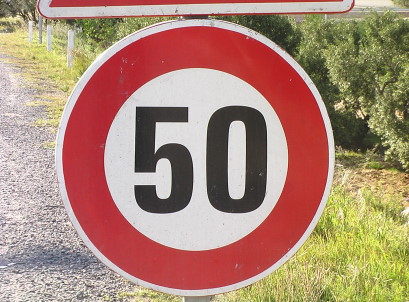
Speed limit (here: 50 km/h = 31 mph)
Without signs, the speed limit in Tunisia is 60km/h in towns, 90km/h on roads outside of towns and 110 km/h on highways.
Please note that this limit applies per car, not per person in a car!
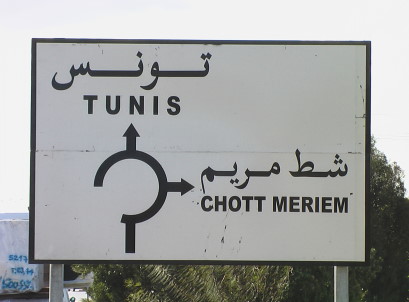
Roundabout ahead (with destinations)
Roundabouts are in Tunisia very frequent. In fact, outside of the biggest towns in Tuisia, you will hardly find traffic lights anywhere.
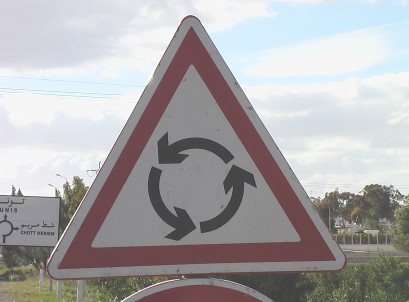
Roundabout ahead
Without any additional sign, the driver who is
IN the roundabout has the right of passage, the ones entering it have to give way.
Pedestrians like to cross the road at roundabouts - and
police controls can usally be found right here.

Prohibition to transport dangerous goods
Unfortunately, I am not fully informed about what is considered to be a "dangerous good" in Tunisia. Whether it is a transporter for gasonline of chemicals, a lorry transporting full gas bottles, a pickup truck transporting multiple people in its load area, sometimes also cows or sheep, or a pickup truck on which fruits and vegetables are stapled up to quite impressive heights
.
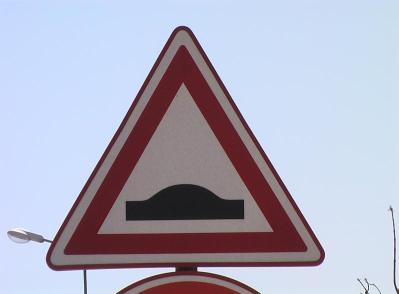
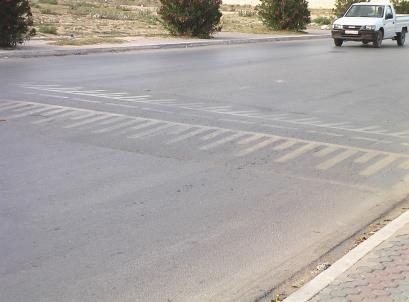
Street bump "Camel Back"
Every driver in Tunisia
knows them, every driver has
seen them too late, and every driver had his
head hit the car roof - and all of that again, and again and...
In my theory, the architect of these bumps once drove into the desert and got the idea by watching the camels. Therefore, I call these bumps "Camel Backs".
There is no standard on the height and size of the camel backs - they can be small and harmless, but also huge and mighty.
Many cars pass these bumps with pedestrian speed (
probably because else it would immediately disassemble on passing). Therefore, you have to take
special caution, because it is very likely that drivers noticing the bump will suddenly and vigorously break!
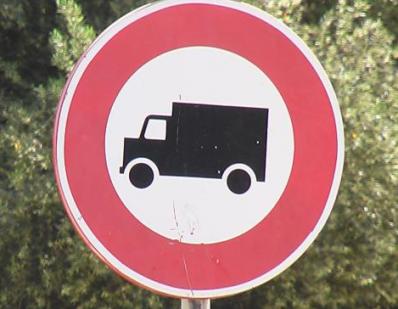
Prohibition for lorries
I don't know exactly how a lorry is being defined in Tunisia, but I assume the definition is dependent just on the maximum possible load of the lorry rather than on its actual load.
In this regard, you can expect all sorts of cars in this road, which, in other parts of the world, would be considered "lorries".
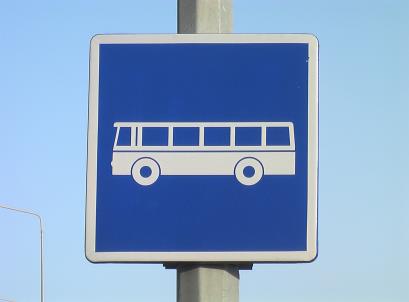
Parking for busses
... and, in reality, for other cars.
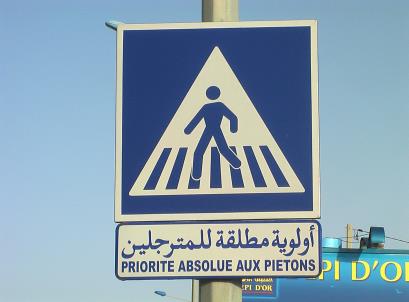
Pedestrian crossing
Don't get fooled by the writing "absolute right of passage for pedestrians"! Crossing the street in this place is neither less nor more dangerous than in any other place; never trust the "right of passge"!

Hospital
Here is an hospital!
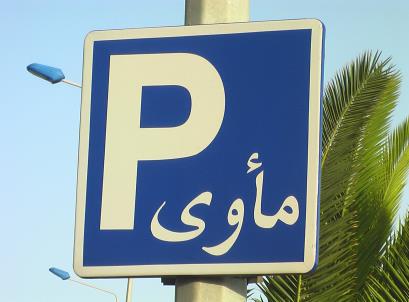
Parking lot
In places with this sign, you usually cannot find an empty spot - as well as in places with the following sign:
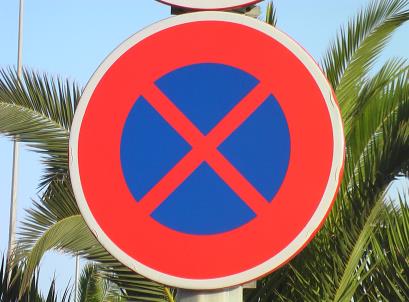
Absolutely no parking or waiting!
Has the same meaning as the
red/white stripes on street borders. Sometimes you can see the police towing away cars which are parking here - but they usually cannot clear a spot as fast as it will become occupied again...
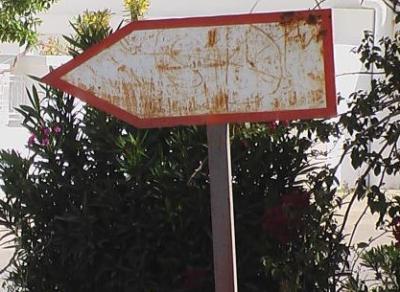
Road to Nowhere
Not only in the desert, but also in big cities, you can find a sign like this. Whether the destination was terminated or shall remain secret, whether the painter simply forgot to add a destination on it, or whether there is a completely different reason for this sign is something, we will never know...
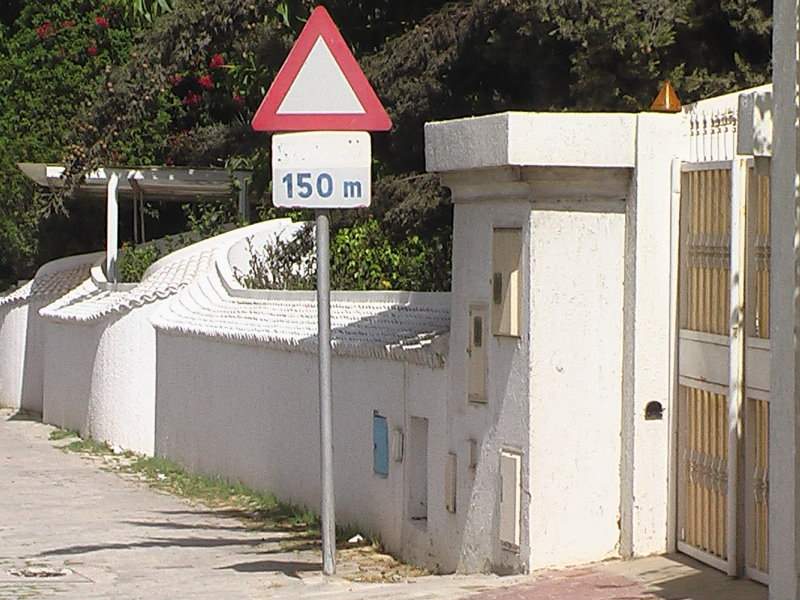
Warning about Nothing
Only novice tunisian travellers would assume that this sign was placed there, because after 150m, the world will come to an end.
But in Tunisia, nothing is as it seems, and the end of the world is
NOT behind this sign, but instead, there is ... well ... nothing.
At least nothing worth mentioning.
